John Edward Bruce, also known as Bruce Grit or J. E. Bruce-Grit (February 22, 1856 – August 7, 1924), was an American journalist, historian, writer, orator, civil rights activist and Pan-African nationalist. He was born a slave in Maryland; as an adult, he…
John Garrison Cutler (May 10, 1833 – February 7, 1913) was a well-known African American entrepreneur and member of the New Hampshire Republican Party who hosted sitting presidents and many others at his "Cutler's Sea View Hotel" at Hampton Beach, New…
John Henry Murphy III (March 2, 1916 – October 16, 2010), was an American newspaper publisher and executive, head of the family-owned enterprise of the Afro-American newspaper based in Baltimore, Maryland. At its peak, it had nine national editions,…
John Henry Murphy Sr. (25 December 1840 – 5 April 1922) was an African-American newspaper publisher based in Baltimore, Maryland. Born into slavery, he is best known as the founder of the Baltimore Afro-American (also known colloquially/for short as The…
John H. Paynter (1862–1947) was an African American writer of poetry and nonfiction who wrote the book Fugitives of the Pearl (1930), a popular history of the largest known mass escape attempt of enslaved people in the United States. The story was based on…
John Hannibal White (c. 1828 – July 26, 1878) was a delegate to South Carolina's 1868 Constitutional Convention, a two-term member of the South Carolina House of Representatives, and a state senator in South Carolina. He worked as a blacksmith. White was…
John Hope Franklin (January 2, 1915 – March 25, 2009) was an American historian who focused on the history of the United States. He is best known for his work From Slavery to Freedom, first published in 1947 and continually updated. More than three million…
John James Smith (1820 – 1906) was a barber shop owner, abolitionist, a three-term Massachusetts state representative, and one of the first African-American members of the Boston Common Council. A Republican, he served three terms in the Massachusetts…
John Jasper (July 4, 1812 – March 30, 1901) was an ex-slave who became a Baptist minister and noted public speaker for Christianity after the American Civil War.
John Jea (1773 – after 1817) was an African-American writer, preacher, abolitionist and sailor, best known for his 1811 autobiography The Life, History, and Unparalleled Sufferings of John Jea, the African Preacher. Jea was enslaved from a young age, and…
John Jones (1816 – May 27, 1879) was an American abolitionist, businessman, civil rights leader, and philanthropist. He was born in North Carolina and later lived in Tennessee. Arriving in Chicago with three dollars in assets in 1845, Jones rose to become…
John Lay Thompson (April 3, 1869, Grand River Township, Decatur County, Iowa – 1930) was an Iowa journalist and businessman who played a key role in the early history of the African American newspaper the Iowa Bystander. Thompson was born to Andy and…
John Lewis Waller (January 12, 1850 – 1907) was an African American lawyer, politician, journalist, publisher, businessman, military leader, and diplomat whose rise culminated in his becoming the United States consul to Madagascar. He was the grandfather…
John Mifflin Brown (September 8, 1817 – March 16, 1893) was a bishop in the African Methodist Episcopal (AME) Church. He was a leader in the Underground Railroad. He helped open a number of churches and schools, including the Payne Institute which became…
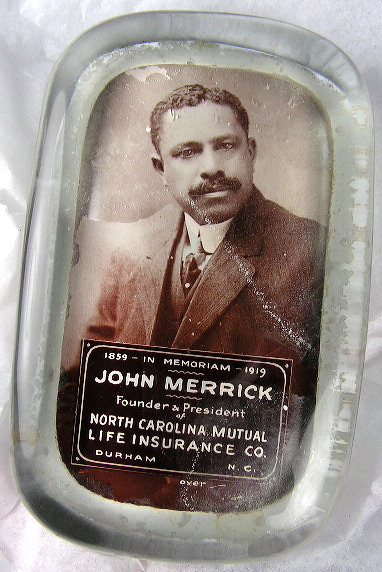
John Merrick (1859–1919) was an American businessman. Born into slavery in Clinton, North Carolina, Merrick founded various companies in the Raleigh, North Carolina and Durham, North Carolina areas, most notably the North Carolina Mutual Life Insurance…
John Newton Templeton (c. 1807 – July 1851) was born into slavery in about 1807, and after being emancipated with his family, he received a classical education and became a teacher in a number of schools for African Americans.
John Noland (c. 1844 – June 25, 1908) was a slave and the personal servant of bushwhacker William C. Quantrill during the American Civil War. Noland was a chattel slave owned by Francis Asbury Noland in Jackson County, Missouri.
John P. Coburn (1811–1873) was a 19th-century African-American abolitionist, civil rights activist, tailor and clothier from Boston, Massachusetts. For most of his life, he resided at 2 Phillips Street in Boston's Beacon Hill neighborhood. Coburn was one…
John P. Parker (c. 1827 – January 30, 1900) was an American abolitionist, inventor, iron moulder and industrialist. Parker, who was half African American, helped hundreds of slaves to freedom in the Underground Railroad resistance movement based in Ripley,…
John Patterson Sampson, D. D. (August 13, 1837 – 1928) also known as "J. P. Sampson", was an American abolitionist, newspaper publisher, writer, lawyer, judge, and minister.
John Quamino (c. 1744 – August 1779) was a formerly enslaved man who trained as a missionary and may have been the first African to attend college in America.
John R. Anderson, also known as J. Richard Anderson (1818–May 20, 1863), was an American minister from St. Louis, Missouri, who advocated against slavery and for education for African Americans. As a boy, he was an indentured servant, who attained his…
John R. Good (1815 – April 1878) was an American freedman and politician in North Carolina who became an advocate for the rights of African-Americans and freed slaves. Born enslaved in 1815, he was emancipated by legislative act in 1855 and ran a…
John Roy Lynch (September 10, 1847 – November 2, 1939) was an American writer, attorney, military officer, author, and Republican politician who served as Speaker of the Mississippi House of Representatives and represented Mississippi in the United States…

 Loading image…