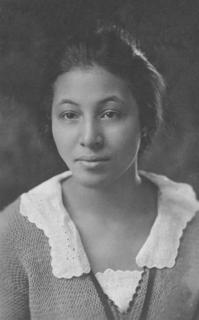
Matilda Arabella Evans (May 13, 1866 – November 17, 1935) was the first African-American woman licensed to practice medicine in South Carolina and an advocate for improved health care for African Americans, particularly children.
Matthew Nojimu Olanipekun Sadiku from the Prairie View A&M University, Cypress, TX was named Fellow of the Institute of Electrical and Electronics Engineers (IEEE) in 2013 "for contributions to computational electromagnetics and engineering education". He…
Matthew Oliver Ricketts (April 3, 1858 – January 3, 1917) was an American politician and physician. He was the first African-American member of the Nebraska Legislature, where he served two terms in the Nebraska House of Representatives (the lower house of…
Mattie E. Coleman (1870–1943) was one of Tennessee's first African-American woman physicians. She was a religious feminist and suffragist who was instrumental in building alliances between black and white women.
Mattiedna Johnson (7 April 1918 – December 2003) was an African American nurse and laboratory technician. In the 1940s, she played a pertinent role in the cure for the fatal scarlet fever epidemic and other diseases that soldiers in World War II were…
Maude E. Callen (November 8, 1898 in Quincy, Florida – January 23, 1990 in Pineville, South Carolina) was a nurse-midwife in the South Carolina Lowcountry for over 60 years. Her work was brought to national attention in W. Eugene Smith's photo essay "Nurse…
Mavis Claytor-Ford (born 1943) was the first black woman admitted to the University of Virginia (UVA) School of Nursing in Charlottesville, Virginia in 1968 and the first African American to receive a bachelor's degree from the school in 1970. She became…
Maxie Clarence Maultsby Jr. (April 24, 1932 in Pensacola, Florida – August 28, 2016 in Alexandria, Virginia) was an American psychiatrist, author of several books on emotional and behavioral self-management, Elected Distinguished Life Fellow of the…
May Edward Chinn (April 15, 1896 – December 1, 1980) was an American physician. She was the first African-American woman to graduate from Bellevue Hospital Medical College, now NYU School of Medicine, and the first African-American woman to intern at…
May Louise Hinton-Wykle (FAAN, FGSA) (born February 11, 1934) is an American nurse, gerontologist, educator, researcher, and the first African-American Marvin E. and Ruth Durr Denekas Endowed Chair at the Frances Payne Bolton School of Nursing of Case…
Dr. Maya Michelle Rockeymoore Cummings (born January 31, 1971) is an American political scientist, public health advocate, technology entrepreneur, and author. She is the founder and chief executive officer of HyperVigilant, a health technology company…
Maynard Ansley Holliday was the Assistant Secretary of Defense for Critical Technologies in the Office of the Under Secretary of Defense for Research and Engineering. He previously worked under Barack Obama, during which time he launched the Defense…
A gray-colored booklet with black san-serif typeface in all capitals that read: [MEDICAL CARE / AND THE PLIGHT / OF THE NEGRO]. The text is surrounded by a shadow box border. Centered beneath the title text reads: [By W. Montague Cobb, M.D., Ph.D.]. The…
Smithsonian National Museum of African American History and CultureCatalog 2014.187
An Italian institute for the research of traditional medicine in Bandiagara, Mali. The institute is housed in modern cone shaped stone buildings designed to reflect a local style, April of 1994. Photographed by Sujatha Pelletier.
Smithsonian Eliot Elisofon Photographic Archives, National Museum of African ArtCatalog EEPA.1998-003, Item EEPA.1998-003-0050
Unbound medical reports, March 1866–October 1868, are arranged chronologically. These include weekly reports of sick and wounded, reports of attendants, and ration reports.
Smithsonian National Museum of African American History and CultureCatalog NMAAHC.FB.M1909, File 4.43.3
This mural study includes depictions of various transportation and scientific industries. It is divided into two fields, an upper and a lower. The upper depicts examples of transportation technology, including a railroad engine, a propeller plane, a blimp,…
Smithsonian National Museum of African American History and CultureCatalog 2012.13.1
A medicine pot being fired is treated with a liquor made from locust-bean pods, which gives it a bronze/brown color. This helps to seal the pot (which is to be used to store liquid medicines) and increase its strength. The locust-bean pods from which the…
Smithsonian Eliot Elisofon Photographic Archives, National Museum of African ArtCatalog EEPA.2016-004, Item EEPA 2016-004-0027
Original text on slide reads, "Medicine stand (Note- it's on the ground as opposed to the wealthier medicine lady with the monkey heads who has a table). Saturday 12 Noon. Market Day".
Smithsonian Eliot Elisofon Photographic Archives, National Museum of African ArtCatalog EEPA.2005-002, Item EEPA 2015-015-1279

 Loading image…