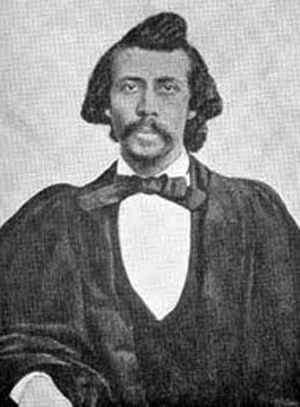
William Beverly Nash (c. 1822 – January 19, 1888) was a barber, shoe shine, porter, waiter, and state senator in South Carolina. An African American, Nash was born enslaved in Virginia, Nash gained his freedom at the age of 43 with the passage of the 13th…
William C. Goodridge (1806 – January 1, 1873) was an American businessman in York, Pennsylvania, in the mid-1800s. He was multiracial and a Black abolitionist and a conductor on the Underground Railroad. Born enslaved, Goodridge and his wife, Evalina…
William Cooper Nell (December 16, 1816 – May 25, 1874) was an American abolitionist, journalist, publisher, author, and civil servant of Boston, Massachusetts, who worked for the integration of schools and public facilities in the state. Writing for…
William Costin (c. 1780 - May 31, 1842) was a free African-American activist and scholar who successfully challenged District of Columbia slave codes in the Circuit Court of the District of Columbia.
William Gibbons (1825 – June 28, 1886), was a formerly enslaved servant, who became a highly successful Baptist minister in Charlottesville and Washington, D.C. He was married to Isabella Gibbons.
William Dorsey Swann (November 4, 1860 – c. December 23, 1925) was an American activist. An African-American born into slavery, Swann was the first person in the United States to lead a gay resistance group and the first known person to self-identify as a…
William E. Matthews (July 1845 - May 2, 1894) was an African-American lawyer, financier, and civil rights activist in Baltimore, Maryland and Washington DC. He was active in promoting education for freedmen during and after the Civil War. He was very…
William Ellison Jr. (April 1790 – December 5, 1861), born April Ellison, was an African-American cotton gin maker, blacksmith and slave owner in South Carolina, and former slave who achieved considerable success as a slaveowner before the American Civil…
William Gustavus Allen (c. 1820 – 1 May 1888) was an African-American academic, intellectual, and lecturer. For a time he co-edited The National Watchman, an abolitionist newspaper. While studying law in Boston he lectured widely on abolition, equality,…
William Gardner (born Billey, c. 1759 - 1795) was an enslaved man born into the family of James Madison in Montpelier, Virginia, to a man likely named Tony. Madison's father gave Gardner to the young Madison as a companion when Madison was a child.
William Grandstaff (~1830s or 1840s – 1901) was an American cowboy and frontiersman who lived in Ohio before settling in Utah Territory and Colorado. Born into slavery, verified information about Grandstaff's life is sporadic, but he's believed to have…
William Grimes (c. 1784 – August 20, 1865) was an African American barber and writer who authored what is considered the first narrative of a formerly enslaved American, Life of William Grimes, the Runaway Slave, published in 1825, with a second edition…
William Horace Ash (May 15, 1859 – February 14, 1908) was an African-American politician and former slave. He was a member of the Virginia House of Delegates during the 1887–1888 session. In 2012, he was one of several African-Americans recognized by the…
William Howard Day (October 16, 1825 – December 3, 1900) was a black abolitionist, editor, educator and minister. After his father died when he was four, Day went to live with J. P. Williston and his wife who ensured that he received a good education and…
William H. Gibson (c. 1829 – June 2, 1906) was an educator and community organizer in Louisville, Kentucky. He was one of the first African American teachers in that city, active before the Emancipation Proclamation.
William H. Holland (1841 – May 27, 1907) was an educator who served one term in the Texas Legislature. He was the brother of Medal of Honor recipient Milton M. Holland. He was born into slavery in Marshall, Texas in 1841, the child of Captain Bird Holland…
William Henry Lewis (November 28, 1868 – January 1, 1949) was an African-American pioneer in athletics, law and politics. Born in Virginia to freedmen, he graduated from Amherst College in Massachusetts, where he had been one of the first African-American…
William H. Yates (died September 18, 1868) was an African-American abolitionist, writer, and the President of the first Convention of Colored Men. He focused his writing in the form of articles and editorials in newspapers; along with responses about books…
William Hamilton (1773 – December 9, 1836) was a prominent African-American orator and civil rights activist, based in New York City. He was born to a free black woman and was reputed to be a natural son of Alexander Hamilton, the Founding Father. William…
William Harvey Carney (February 29, 1840 – December 9, 1908) was an American soldier during the American Civil War. Born enslaved, he was awarded the Medal of Honor in 1900 for his gallantry in saving the regimental colors during the Battle of Fort Wagner…
William Henry Cling (October 1866 – February 25, 1937) was an American inventor during the late 1800s and early 1900s. He is responsible for the invention and improvement of several apparel-related items as well as the creation of mechanical devices. Cling…
William Henry Grey (December 22, 1829, in Washington, D.C. – November 8, 1888, in Helena, Arkansas) was a state legislator, storeowner and church leader in Arkansas. He served in various elected and public offices in the state during the Reconstruction…
William Henry Singleton (August 10, 1843 – September 7, 1938) gained freedom in North Carolina and served as a sergeant in the United States Colored Troops during the American Civil War. After its end and emancipation, he moved North to New Haven,…
William Hooper Councill (July 12, 1848 – April 9, 1909) was an American former slave and the first president of Huntsville Normal School, which is today Alabama Agricultural and Mechanical University in Normal, Alabama.
 Loading image…